
Blog

Schools are trying to find ways of cutting down printing expenditure without having to compromise educational standards, so it is only natural that material resources are the first place to look when trying to save money.

All businesses use office printers, and few really know which printer to purchase that will cater to their requirements.
Not all printers print documents of the same quality, not all printers can perform the same jobs and have the same functions. Choosing the right printer is pretty much as complex a purchase as getting a computer, laptop or smartphone.

The world is at war with plastic pollution. South Africa has officially made the top 20 of the world’s worst plastic polluters – we are ranked at number 11, worse than India, and the entire United States.
The reason is that South Africans on average, use approximately two kilograms of plastic per day, which amounts to a whopping 42 million tons of plastic waste generated each year. The problem is that only 21 % of this is recycled – the remaining 79 % of plastic waste is either disposed to landfill, or ends up in our oceans. In South Africa, the equivalent of one dump truck of plastic is emptied into the ocean every minute! In fact, it is predicted that by the year 2050 there will be more plastic in the ocean by weight, than fish!
Will the printer industry eventually die?
I think most people will answer the above question with an unequivocal “of course it will die”, and this answer is no doubt based on the rapidity at which digital accessibility is growing (not to mention how happy our youth are on their screens!).

Perhaps then the question should be “how quickly” will it die?
“Move fast with stable infrastructure.” – Mark Zuckerberg
Document archiving and management can be very inefficient when not handled properly, and can also be a considerable pain point in large organisations.
To get some perspective, here are some facts that Pam Doyle found out about document handling in a 2010 research study:
- Professionals spend 5-15% of their time reading documents, and up to 50% of their time looking for these same documents
- The average document gets photocopied 19 times
- Users send and receive 133 emails a day (on average)
These kinds of facts highlight how inefficient document archiving and management practices can negatively impact productivity, but how does one address this?

Can we ever understand the true cost of downtime in an organisation? The only way to do this is to get a grip on what downtime really costs. The first step is to define what “downtime” means, which is “system unavailability”. Even if an application is “up and running”, it is still considered downtime if the application can’t be used.

The next time you print a document ask yourself: Do I need to print this?

The answer may surprise you.
Most companies are strategically focused on digitisation. But what does this really mean? It is not only about digital documents and avoiding printing, but also about finding more efficient and sustainable ways of doing business.
I have been in the office automation environment for over 15 years and I still love what I do. From the early days of calling on customers to sell remanufactured laser print cartridges, to our current focus on selling a win-win outcomes-based solution, I am amazed at how this industry has progressed and I am excited about the road ahead.

According to Gartner, by 2020, 80% of IT infrastructure modernisation projects will fall short of cost saving targets because of an inability to simplify and address unnecessary complexity.
To be able to address this complexity, and meet cost savings targets in today’s competitive commercial landscape, businesses need to adapt to best practice. In IT Infrastructure, this means that it is crucial that I&O (Infrastructure and Operations) leaders have clear strategies in place for current and future business’ operations.

As with any kind of asset investment, it is worth it to take the time to consider whether buying or leasing a printer is the best option. This is no different when it comes to buying or leasing an office copier, scanner or other multi-function device. In both cases, you want to understand the advantages and disadvantages of both a lease or purchase agreement.

To help you make a more informed decision when it comes to gaining control of print costs, here is a comprehensive list of pros and cons related to both purchasing and leasing new digital Multi-function Printers (MFP’s).
Do you run a business? Do you want business success?
It’s sometimes hard to know how to stay on the cutting edge – especially in an age where things continue to evolve and change at a rapid rate. Today, let’s run through five ways in which you can make a significant improvement to your business for the coming year.

Print assessments have become somewhat of a standard in the Office Automation industry. It’s not uncommon for copier salesman to compare current spend to a new solution and advise on the savings available, should you sign on the dotted line.
The problem here is that the print estate is not looked at in its entirety. Only then will you see the current state compared to where you could be.
The current state of our nation and the world would suggest that the moral compass has gone a little haywire. Almost every bit of news we read is filled with corruption, violence, greed, power and generally negative stuff.
I ask myself, what is going wrong with us? Why can’t we get along? Why are people stealing? Why are we fighting one another? Why, why, why? Have we lost the plot? What has gone wrong?
I certainly don’t have the answers, but what I see is lack of leadership, people want more and they will do almost anything to get it in as little time as possible, we have become more and more self-centred and through this, our value systems are compromised.

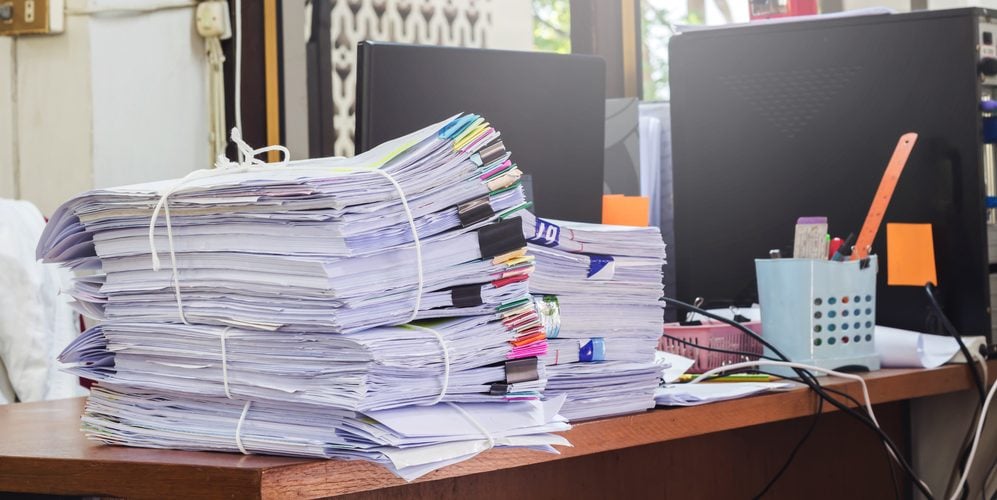
Every year, tons of paper is used in workplaces all over the world, in both large and small offices. Many of these offices have actively taken up recycling, but even though it is an inexpensive and environmentally conscious option, a much more cost-effective strategy is to reduce daily paper consumption.
“The secret of change is to focus all of your energy, not on fighting the old, but building the new” – Socrates.
Every business should aim to optimise their time and operational productivity using best practices. One important aspect to consider when using the various methods available to do so is the employee’s user experience when performing their duties.

Sage research has found that businesses spend approximately 120 operational hours a year on administrative tasks. Almost 20% of these can be attributed to accounting administration, such as the generation of purchase orders, invoicing and reconciliations.
If other administrative tasks are added to this, such as signing off delivery receipts and truck manifest documents, as well as registering suppliers, it is easy to see how these tasks can have a direct impact on the business’ ability to perform at an optimal level (where all hours are used as efficiently as possible). So how does one streamline these tasks?
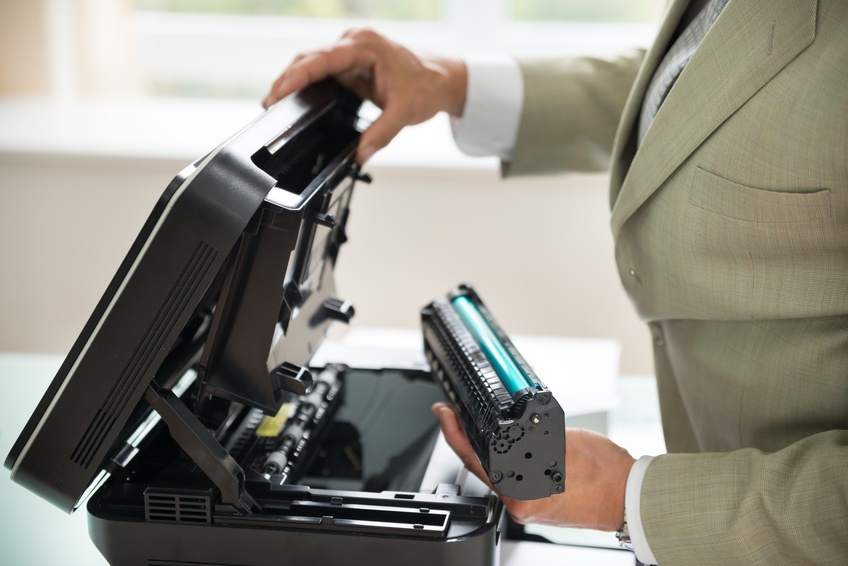
It is estimated that over 1.3 billion printer cartridges are sold every year, and according to the International Data Corporation (IDC), more than 12 million laser and ink cartridges are imported into South Africa annually.
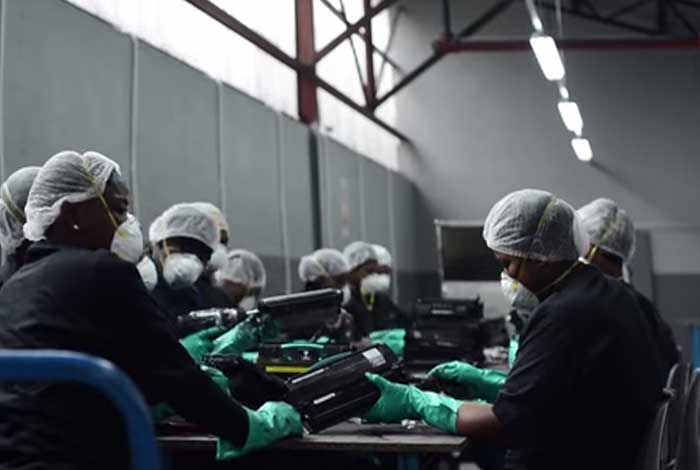
The question is, how many of these laser and ink cartridges end up in landfills?

I was fortunate enough to share a panel discussion with Stephen Saad, founder and CEO of Aspen Pharmaceuticals. Something that he said resonated with me and I will certainly use it in the future.
When he was posed with the question, “What tips could you share with the audience that have assisted you in reaching your business success?” He responded by saying that he continuously advises his people to focus on four things a year, only four. To make sure that those four things get your undivided attention. If something gets thrown at you that is not going to assist in reaching those four things, leave them alone. If you complete those four things, you will be amazed at what you can achieve.

Recent Comments